For salons and barbershops
A new client is easy.
The second visit is the business.
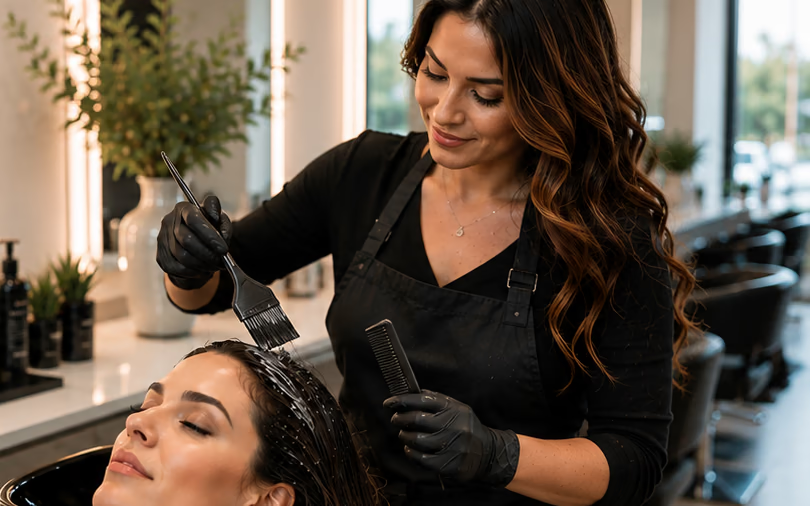
Salon marketing is sold as an acquisition problem and is almost always a retention one. We build the local presence and the booking experience that bring the right client in — and we report rebooking rate and chair utilisation alongside cost per new client, because the first visit rarely pays for itself.
In this program
- SEO
- Google Ads
- Google Business Profile
- AI Visibility
- Reputation
- Call Tracking
- Answering Service
- Reporting
The problem
The first visit rarely pays for itself. The fifth one does.
Discounting a first cut or colour to fill a chair is the oldest tactic in the category, and on its own it is a way to lose money efficiently. A new client acquired at a discount is worth almost nothing until they come back at full price; the entire economics of a salon sit in the gap between the first appointment and the fourth. Which makes rebooking rate the number that decides the year, and it is almost never in an agency report.
The second problem is which chair. Demand is rarely spread evenly across a team — one stylist is booked three weeks out while another has gaps on a Tuesday — and marketing that only says “book with us” cannot move it. Utilisation, not headcount, is what caps revenue.
And the discovery has genuinely moved. People find a stylist through maps, reviews and photographs, and increasingly by asking an assistant for somewhere near them that does a specific thing to a specific hair type. A salon with no online booking and eleven reviews is invisible to all three, however good the work is.
What we report instead
Cost per new client
Traced to an attended first appointment, not to a click or a form fill.
Rebooking rate
What share come back, and how quickly — the number that decides whether acquiring them was worth it.
Chair utilisation
Booked hours against available hours, by stylist, so marketing can be pointed at the gaps rather than at the person already full.
What we run for Salons
The whole stack, tuned for a salon.
Bought separately these underperform. Run together, each one makes the next cheaper.
01
Local Search & Map Pack
Rank for “hair salon near me”, “balayage”, “barber” and the services you actually want more of, in the areas your clients travel from. Google Business Profile built and managed — with the photographs and service list filled in properly, which is most of the work in this category — and the review programme that drives local position.
02
Reputation & Portfolio
Reviews and pictures are the shopfront now. A systematic way of asking after the appointment, and the before-and-after work published where it is actually searched rather than only where it is scrolled. In beauty this moves ranking and conversion at the same time, which is unusual and worth exploiting.
03
Booking That Works on a Phone
Most salon enquiries happen after hours from a phone, and every step between deciding and being booked loses a share of them. Online booking that shows real availability by stylist and service, deposits where no-shows are a problem, and a site fast enough that nobody gives up on it.
04
AI Visibility (GEO / AEO)
“Where can I get curly hair cut near me on a Sunday?” is now asked of an assistant, and the answer names a couple of salons. Crawler access, plus structured data covering services, specialisms, stylists, prices and opening hours — the detail a model needs before it will name yours.
05
Capture & Rebook
The missed call during a colour is a client who booked elsewhere. AI answering and trained front-desk handling catch what the chair cannot, and the rebooking prompt — at the end of the appointment, then in the reminder — is treated as part of the marketing rather than as somebody's good intentions.
06
Measurement & Growth
Spend, leads, cost per lead, cost per acquisition, revenue and return on spend — one clean scorecard every month, plus a strategy call to decide what to scale and what to cut. You always know what a customer costs and what they're worth.
Proof, not adjectives
Where our numbers come from.
Straight answer about the figures Red Palm publishes: $330 → $51 per PPC lead, three trucks to nine inside a year, six consecutive years of doubling. Those were earned in home-service accounts and we are not going to dress them up as salon results. The mechanics are what carry across — local search, reviews, booking friction and honest attribution behave the same way for a chair as for a van, and the retention problem underneath this page is the same one we solve for recurring-service clients. Ask on the call and we will open the real accounts on screen.
Straight answers
The questions a salon owner actually asks.
Before you hire any marketing agency, make sure you know these answers.
Should I discount to bring new clients in?
- Only if you know your rebooking rate, because the discount is an investment that pays back on the second visit or not at all. Run blind it reliably recruits people who came for the price and leave for the next one. We would rather measure it first, then decide — and if the rebooking rate is low, fixing that is worth more than any new-client campaign.
Is Instagram not enough?
- It is excellent for showing the work and poor at being found. Somebody who already follows you sees it; somebody new in the area opens maps or asks an assistant. Those are different discovery paths and the second is where salons are usually invisible. The portfolio should live in both places — the point of the search work is that the photographs get found by people who have never heard of you.
Can you fill one stylist's gaps rather than the whole salon's?
- Yes, and it is usually where the fastest revenue is. Service and stylist-level pages, booking that exposes real availability, and spend pointed at the services with room rather than at the ones already booked three weeks out. It needs your utilisation data, which is the first thing we ask for.
Why aren't AI agents recommending my business?
- Usually one of two things. Your robots.txt is quietly blocking the AI crawlers — GPTBot, ClaudeBot and Google-Extended are blocked by default on a surprising number of sites — or your pages carry no structured data telling the model what you do, where you work and when you're open. Both are fixable, and most of your competitors haven't done it yet.
Do I own my accounts and website?
- Yes. The site, the domain, the ad accounts, the Google Business Profile, the analytics — all in your name. You keep everything if you ever leave. Marketing built on a vendor's rented accounts is a hostage situation, and cleaning that up is half of what we get called in to do.
How fast will I see results?
- Profile, photographs and review work can move local position within weeks, and booking improvements convert traffic you already have almost immediately. Rebooking rate is a slower read because it needs a cycle or two of clients to come back before the number means anything — usually a quarter. We report it from month one anyway so the baseline is honest.
What we run
Get found everywhere your customer looks. Then booked.
Bought separately they underperform. Run together, each one makes the next cheaper.
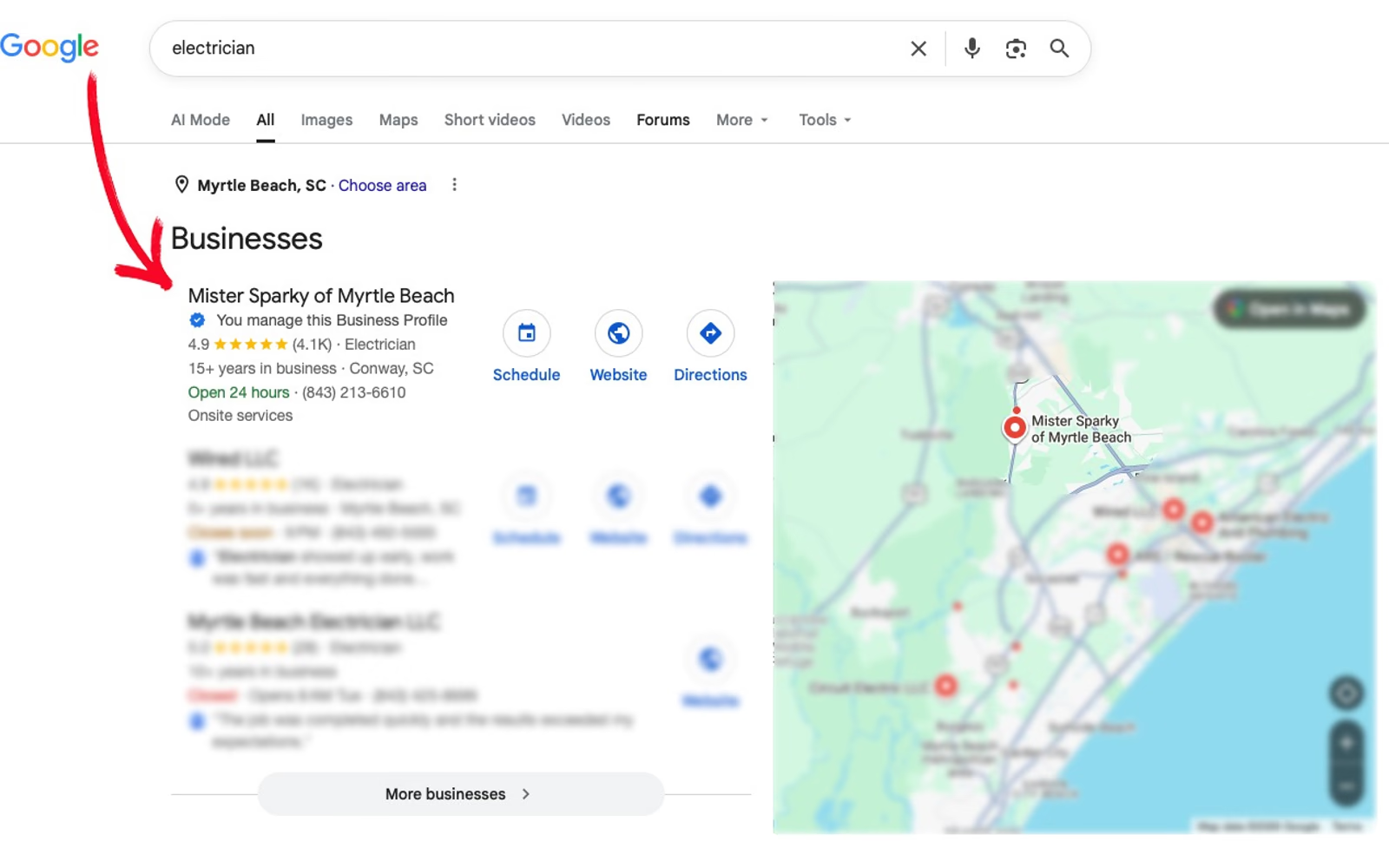
One customer, six surfaces
They rarely arrive from one place. Each of these is a chance to be the name they remember — or the one they never saw.
- GoogleBe found
- AI answersBe recommended
- YouTubeBe chosen
- MapsBe local
- Your websiteBuild trust
- Booked jobsThe point
AI doesn't recommend businesses because they use the right keywords. It recommends businesses it understands. We structure your website with connected topics, schema, FAQs, entity relationships, and machine-readable content so Google AI, ChatGPT, Gemini, Perplexity, and future AI platforms can confidently understand — and recommend — your business.
- Answer Engine Optimization (AEO)
- Generative Engine Optimization (GEO)
- Schema & Structured Data
- Entity Optimization
- FAQ Architecture
- AI Citation Strategy
When someone needs your service, they don't scroll for hours — they search with intent to hire. Our search strategy is built around the questions, services, and buying signals that generate revenue, not just traffic. Every page, service area, and piece of content is planned as part of a connected search ecosystem designed to increase visibility, authority, and booked jobs over time.
- Search Intent Research
- Competitor Gap Analysis
- Local SEO & Maps
- Service Area Strategy
- Topic Clusters & Internal Linking
- Technical SEO
Google Ads, Local Services Ads, Angi and paid social — every dollar attributed to a booked job rather than a click. The published case here took cost per lead from $330 to $51.
- Google Ads / PPC
- Local Services Ads and the Google Guaranteed badge
- Angi and paid social
- Landing pages built for the campaign
- Call tracking and booked-job attribution
Your website is where every marketing channel comes together. SEO, AI Visibility, paid advertising, YouTube, FAQs, and content all point back to one place. We build websites that are fast, structured, easy to navigate, and designed to grow with your business — creating a foundation that supports higher rankings, stronger AI visibility, and more booked jobs.
- High-Performance Websites
- Conversion Optimization
- Internal Link Architecture
- Mobile-First Experience
- Technical SEO Foundation
- Scalable Site Structure
An AI answering service and trained CSRs that pick up on the first ring, qualify the job and book it. The call you missed is the job you lost.
- AI answering service, first ring
- Trained CSRs for overflow and after hours
- Job qualification and booking
- Every call transcribed and scored
- Call-to-campaign attribution
Marketing shouldn't feel like a mystery. Every month, you'll see exactly what's working, what's improving, and where we're making strategic adjustments. We don't just send reports — we analyze the data, identify new opportunities, and continuously refine your campaign to generate more leads and long-term growth.
- Transparent Reporting
- Lead & Revenue Tracking
- Performance Analysis
- Growth Strategy
- Monthly Optimization
- Continuous Improvement
Check out our AI CSR
It never misses a call. That's money back on your table.
The calls that come in after hours mostly go to voicemail — where they quietly die. Our AI CSR picks up on the first ring, every single time, qualifies the job and books it. Every call it catches is revenue that would otherwise have gone to whoever answered first.

What it did
- Length
- —
- Outcome
- —
- Window
- —
- Price question
- Diagnostic fee
- Two windows offered
- Booked
Every call is transcribed, scored and attributed, so you can see which campaigns produce booked jobs rather than just ringing phones.
Reporting & ROI
Every month, the money.
Not a dashboard you never log into. Spend, new clients, rebooking rate, utilisation by stylist and cost per new client, traced to the campaign behind each one.
Every campaign is traced from the click or the call all the way to the booked job and the revenue it produced. You see which campaigns make money and which ones we’re about to kill — before you have to ask. Once a month we sit down, walk the numbers, and decide what to spend more on and what to cut.
Put a dollar in, know exactly what comes back out.
Monthly scorecard
Your accounts, in your name.
| What you spent | |
|---|---|
| $8,400 | |
| What it produced | |
| 214 | |
| $39 | |
| 96 | |
| $87 | |
| What came back | |
| $312,000 | |
Return on spend
37×
Tap or hover any line to see exactly what it counts — and what it deliberately does not.
Illustrative sample — one month of a mid-size program, shown to make the format concrete. Your numbers will be your own.
Start here
Let’s start a conversation.
A few questions, then a real answer from a person — and a 90-day teardown of what we’d change, whether or not you hire us.
Check your own site
How does your site actually hold up?
One address, one test. Google loads your site on a throttled mid-range phone and reports what a real visitor gets, and at the same time we check whether AI agents are even allowed to read you. Takes up to a minute or two, and we don't keep the result.
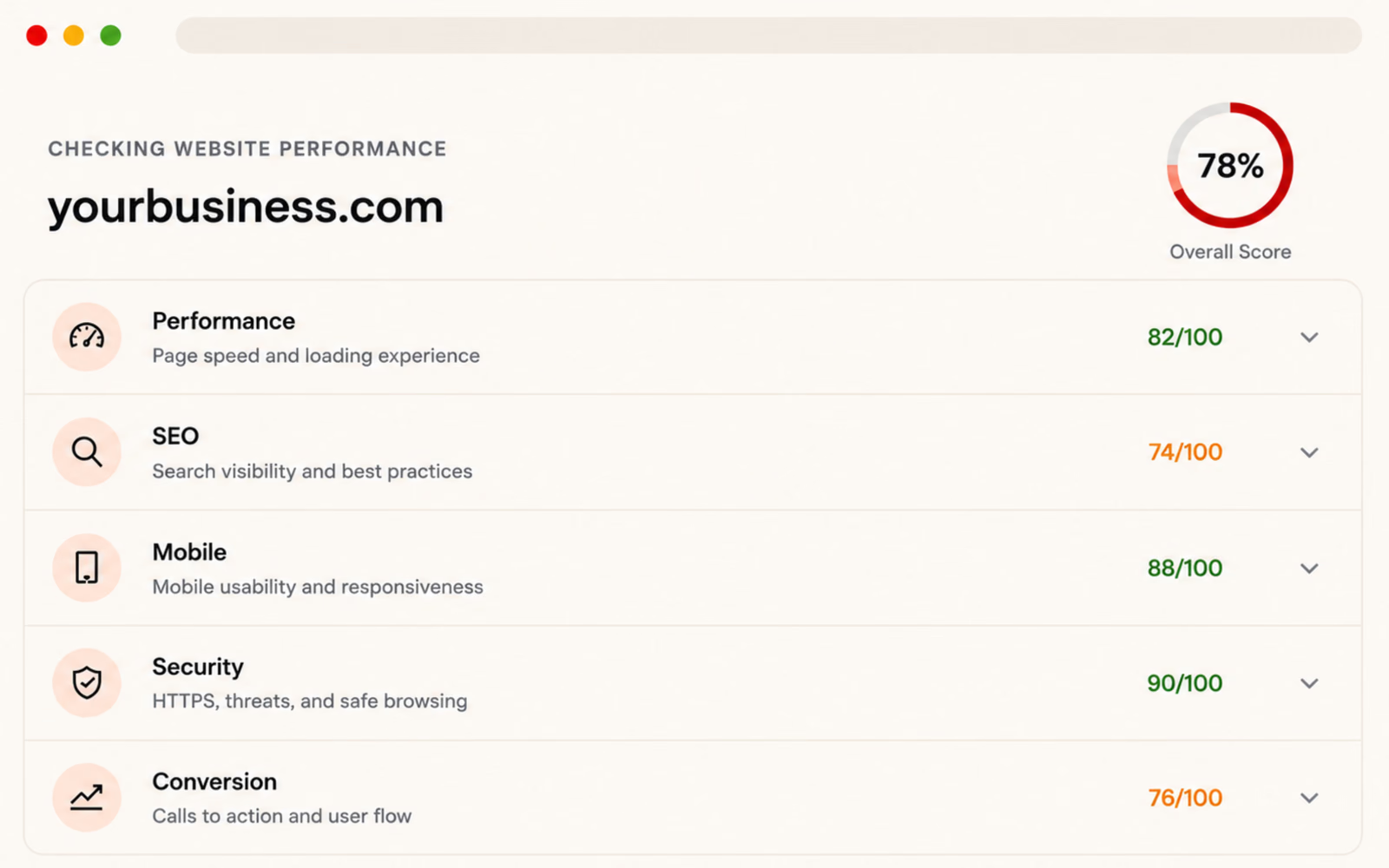
Measured by Google PageSpeed Insights on a simulated mid-range phone. Where your site has enough traffic, the numbers are what real visitors actually experienced over the last 28 days; where it does not, they come from this single test run and are labelled as such. Thresholds are Google’s published Core Web Vitals bands. The agentic browsing score is Google’s too — a Lighthouse category they describe as still under development, measuring whether an AI agent can operate the page.
How it works
Research. Build. Grow. Repeat.
Every campaign follows the same proven process — designed to produce measurable, long-term growth.
- Step 1
Research
We uncover search demand, competitor gaps, customer questions, and AI opportunities before a single recommendation is made.
- Step 2
Build
We create one connected marketing system where SEO, AI Visibility, paid media, websites, content, and video all work together.
- Step 3
Launch
Every campaign is deployed with performance, visibility, and conversion in mind — across Google, AI, YouTube, and paid channels.
- Step 4
Improve
We measure everything, refine continuously, and help your business grow month after month through data-driven optimization.
The stack behind it
- SEO
- Google Ads
- Local Services Ads
- AI Visibility
- Google Business Profile
- Answering Service
- Video
- Branding
- Paid Social
- Call Tracking
- Reporting
- Strategy
Insights
We publish what we know.
Including the parts that cost us upsells — Domain Authority is not a ranking factor, and we will keep saying so.
Start here
Let us look at your marketing.
One meeting. We pull your real numbers and your whole digital presence, then hand you everything we found. Implement it yourself and you'll start making money without ever hiring us. That's the conversation.
- Your real numbersCost per lead, ROI, what a job actually costs you to win, pulled from your data, not industry averages.
- Your full visibilityGoogle, Maps, and whether AI recommends you — we check what ChatGPT and Google AI say when your customers ask who to call.
- The whole plan, freeEvery fix we'd make, in plain English. It's yours either way, including the work that would make us more money.